
Displaces diesel
11M
litres

Sustainability is the core of Reverlast's value creation. We replace diesel generation with clean energy, repurpose waste materials of the wind industry, contribute to healthy marine ecosystems and make green energy accessible to the communities that need it most.
Island communities pay some of the highest electricity prices in the world, and carry some of the highest carbon footprints per kilowatt-hour, because their grids run almost entirely on shipped diesel.
Reverlast nearshore floating solar displaces that diesel. No dependence on regular shipments. No competitive land use. Just clean, resilient and affordable energy for communities on the front lines of climate change.
Over its 25-year lifespan, each 1MWp Reverlast installation:
Displaces diesel
11M
litres
Saves on diesel costs
20M+
US$
Avoids emissions
32 000+
tCO2e
From combustion alone. Avoided regular shipment emissions additional.

Wind turbine blades are one of the renewable energy industry's most uncomfortable loose ends. Tens of thousands of tonnes of composite material are decommissioned every year, and most of it ends up in landfill or incinerated, because no one has figured out what to do with it.
We repurpose decommissioned blades whole. No grinding, no cutting, no processing waste. A second life of 25 years as a structural float, continuing the contribution to the energy transition.
At end of life, we pull our platform on shore and containerize them for next phase repurposing/cycling on larger mainland facilities. Here we target a 70% direct reuse share in new floating platforms. The rest we trust to the maturing composite recycling technology.
Each 1MWp Reverlast installation:
Repurposes blade material
150
tonnes
Gives second life
25
years
Targets EoL
70%
reuse
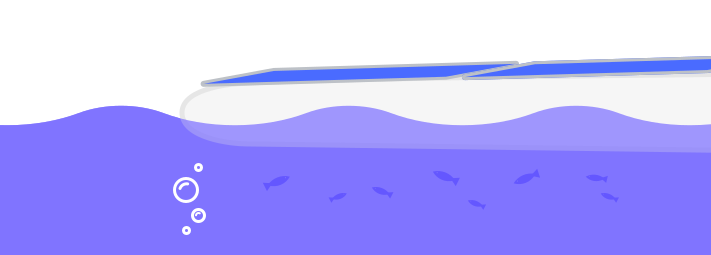
Submerged blade structures don't just float, they become habitat. The surface functions similarly to an artificial reef, attracting fish and invertebrates within months of installation.
Emerging research suggests that partial shading from floating platforms may also help mitigate coral bleaching under thermal stress.
Our platforms use the same fibreglass composite already found in the hulls of recreational boats sharing these waters, except significantly thicker and built to survive decades of punishment. This means that the microplastic risk profile is meaningfully lower, and we monitor it continuously to verify that in practice.
Unlike most marine vessels, we don't use antifouling coatings, so no biocides leach into the water.
We treat community consent as a prerequisite, not a box to tick. That means early engagement, genuine consultation, and siting decisions that respect existing fishing grounds and coastal access.
Reverlast platforms are installed and maintained with the support of local workers, keeping jobs and skills in the community.
Once installed, Reverlast cuts electricity costs by up to 50% for communities that have long had no alternative to expensive diesel, making freshwater more accessible, keeping classrooms running, and enabling businesses that couldn't operate before.